
Top Commercial Real Estate Trends to Watch in 2026
Explore the latest trends shaping the commercial real estate industry in 2026, including hybrid workspaces, sustainable buildings, and rising demand for mixed-use developments. This article helps investors and developers stay ahead of evolving market dynamics.
1. Rise of Hybrid Workspaces
The shift toward hybrid work models continues to redefine office space demand. Companies are moving away from traditional long-term leases and embracing flexible, scalable environments.
Businesses now prioritize:
- Smaller, high-quality office spaces
- Co-working and shared environments
- Locations closer to residential hubs
This trend is increasing demand for flexible office solutions and pushing landlords to redesign spaces that support collaboration rather than just occupancy.
2. Growing Demand for Sustainable Buildings
Sustainability is no longer optional—it’s a major investment driver. Tenants and investors are actively seeking eco-friendly buildings that reduce operational costs and meet ESG (Environmental, Social, Governance) standards.
Key features in demand include:
- Energy-efficient HVAC systems
- Solar panels and renewable energy integration
- Green certifications like LEED
Sustainable properties not only attract premium tenants but also offer long-term cost savings and higher asset value.
3. Expansion of Mixed-Use Developments
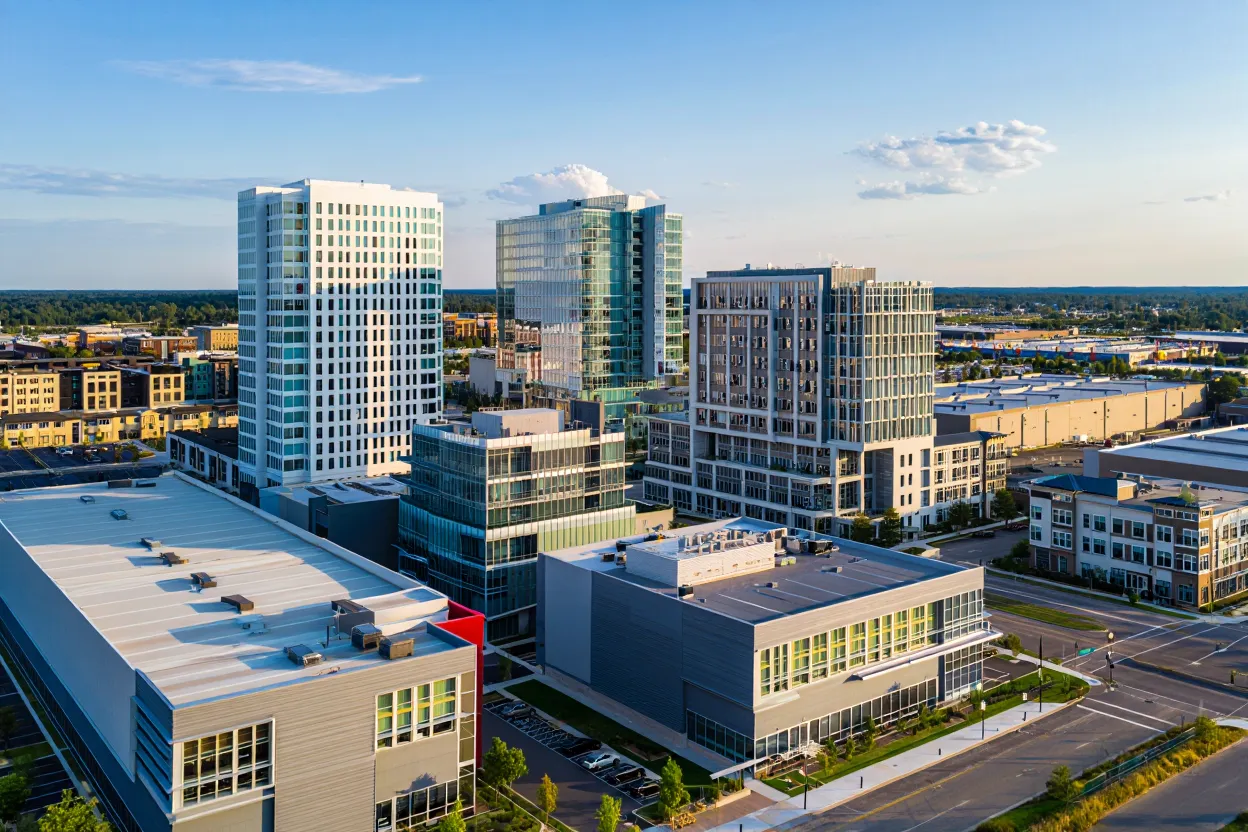
Mixed-use developments are becoming increasingly popular, combining residential, retail, office, and entertainment spaces into one integrated environment.
Why this trend is growing:
- Enhances convenience and walkability
- Creates vibrant, community-driven spaces
- Reduces dependency on commuting
Developers are focusing on live-work-play ecosystems, especially in urban and suburban growth corridors.
4. Industrial Real Estate Boom Continues
E-commerce growth and supply chain optimization are fueling strong demand for industrial properties, including warehouses, logistics hubs, and distribution centers.
Key highlights:
- Increased need for last-mile delivery facilities
- Rising demand for cold storage and specialized logistics
- Strategic locations near highways and urban centers
Industrial real estate remains one of the most resilient and high-performing asset classes in 2026.
5. Technology Integration & Smart Buildings
Smart technology is transforming how commercial properties are managed and experienced.
Emerging innovations include:
- IoT-enabled building management systems
- Smart security and access control
- Data-driven energy optimization
These technologies improve operational efficiency, reduce costs, and enhance tenant experience, making properties more competitive.
6. Shift Toward Suburban Markets
Urban cores are no longer the only hotspots. Suburban markets are seeing increased interest due to affordability, space availability, and changing lifestyle preferences.
Investors are targeting:
- Growing suburban business districts
- Retail centers in residential communities
- Office spaces closer to where employees live
This decentralization is opening new opportunities beyond traditional city centers.
7. Focus on Tenant Experience
Tenant expectations are evolving, and landlords are adapting by offering more than just physical space.
Modern properties now include:
- Wellness amenities (gyms, green spaces)
- High-speed connectivity
- Community engagement features
A strong tenant experience leads to higher retention rates and long-term profitability.